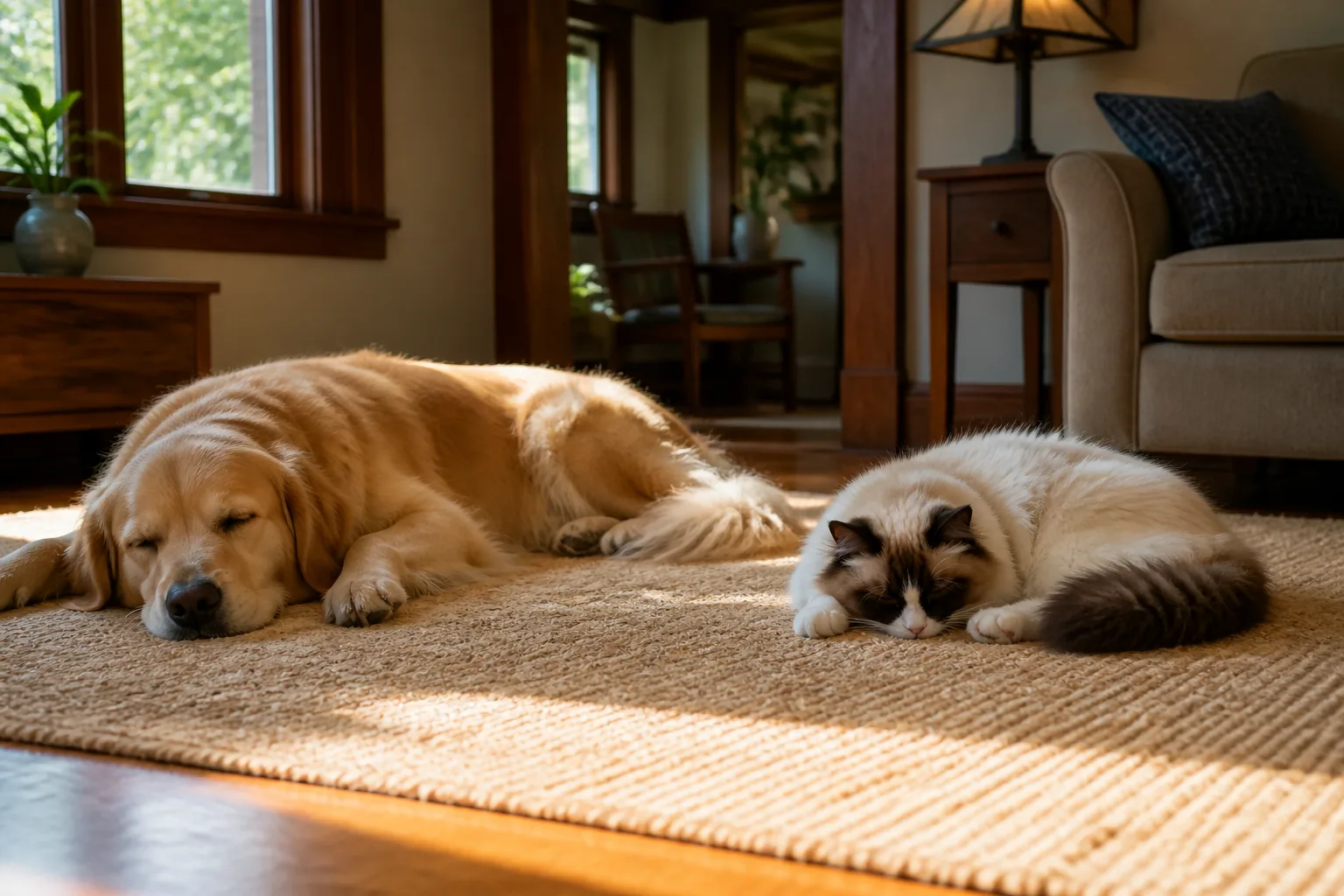
Why do we think pets dream?
Sleep is not one still state. Dogs and cats move through different sleep stages, including REM. Eyes may move beneath the lids, breathing patterns can shift, and small muscle movements can appear. Canine sleep studies record REM and non-REM stages and show that sleep location and daytime activity can affect sleep structure.
Animals cannot wake and describe a dream, so any claim about content remains an inference. A 1992 cat study examined rapid eye movements alongside oneiric, or dream-like, behavior and found associations with orienting and body movements. That supports a dream-like process, not a translation such as “they are chasing a squirrel.”
Research: Scientific Reports study of domestic-dog sleep electrophysiology · PubMed: eye movements and oneiric behavior in cats.
Which sleep movements are usually normal?
Common dream-like movements are usually brief and small while the body stays generally loose. You might see whiskers or eyelids move, paws flick, a tail tip twitch, breathing briefly change, or hear a quiet yip or murmur. The pet continues sleeping or returns quickly to normal after waking.
| More like ordinary sleep | Ask a veterinarian promptly |
|---|---|
| Brief, small movements | Stiff, violent, or prolonged movement |
| Body remains mostly relaxed | Rigid body or uncontrolled convulsions |
| Gradually responds to a familiar voice | No response to voice or loss of consciousness |
| Quick return to normal after waking | Confusion, trouble standing, or abnormal panting afterward |
| No other physical signs | Drooling, incontinence, vomiting, or breathing difficulty |
Should you wake a twitching pet?
Most brief, relaxed twitching does not need interruption. Sudden touch can startle a deeply sleeping animal and trigger a defensive reaction. If you need to check, say their name softly from a little distance and give them time to wake; do not place your hand near the face.
If an episode leaves you uncertain, a video recorded safely is usually more useful than repeatedly waking the pet. Note when it began, how long it lasted, whether the body was loose, response to voice, and behavior during the minutes afterward.
When should you not assume it is a dream?
Stiff, prolonged, violent, or sleep-disrupting movements need professional judgment. Contact a veterinarian promptly if an episode includes breathing difficulty, drooling, incontinence, vomiting, no response to voice, confusion, or abnormal walking afterward. Suspected toxin exposure, ongoing convulsions, or breathing trouble should be treated as urgent.
Veterinary reference: VCA Animal Hospitals on sleep twitching and warning signs.
Pet dreams: common questions
Do dogs and cats really dream?
Both experience REM sleep, and neurological and behavioral research supports dream-like processes, so the answer is very likely yes. We cannot read exact dream content from movement.
Should I wake a pet who is twitching?
If movements are small and brief while the body stays relaxed, usually let them sleep. If you need to check, use your voice from a little distance rather than touching the face suddenly.
How can I tell a dream from a possible seizure?
Dream-like movements are usually brief and loose with a quick normal recovery. Stiff, prolonged, violent, unresponsive episodes, or drooling, incontinence, breathing changes, and confusion afterward need prompt veterinary advice.