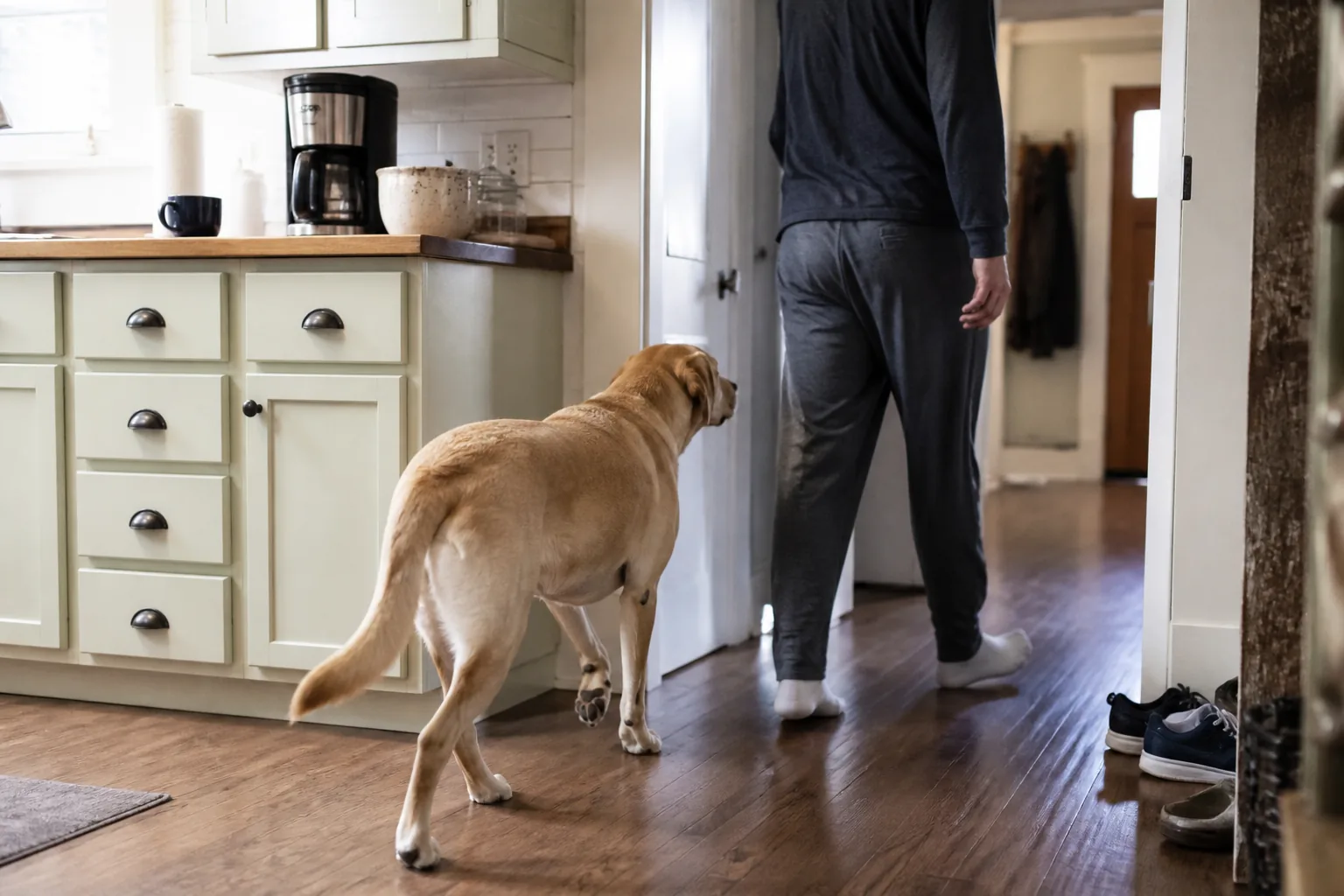
Why does a dog follow you around the house?
Dogs are social household companions. The kitchen may predict food, the door may predict a walk, the desk may offer a scratch, and a moving person carries more information than an empty sofa. Dogs quickly learn these patterns.
Attention can reinforce the choice. Looking down, speaking, petting, or offering a snack may make “go see where they went” worth repeating. That is not manipulation or proof of dependency; it is an ordinary rewarded behavior. A sudden increase matters more than a lifelong personality because aging, sensory change, pain, or uncertainty can also increase contact seeking.
How is following different from separation distress?
The distinction is not how close the dog stays while you are home; it is what happens after departure. VCA Animal Hospitals describes dogs who react to pre-departure cues and show vocalizing, destruction, elimination, trembling, salivation, or inability to eat when alone. The American Society for the Prevention of Cruelty to Animals also advises ruling out boredom, training gaps, outside triggers, and medical causes.
Reviewed sources: VCA Animal Hospitals: separation anxiety in dogs · ASPCA: separation anxiety and look-alike problems.
Try a three-day household-shadow log
Do not write only “followed me again.” Choose three short windows on three consecutive days and note the trigger, distance, and outcome. The pattern helps separate personality, reward history, and genuine distress.
How can you encourage calm independence?
Give the dog a comfortable optional resting place and reward brief settling there while you are still in the room. Add distance and time gradually so independence predicts safety and routine rather than sudden isolation. Walks, sniffing, play, and safe food toys should also meet everyday needs.
Do not test anxiety with scolding, forced confinement, or waiting for panic to burn out. If departure cues already cause clear panic or the dog risks injury, contact a veterinarian and an evidence-based, non-punitive behavior professional.
Why dogs follow: common questions
Does following me mean separation anxiety?
No. Many dogs simply enjoy company or know the household routine. Judge the pattern by sustained distress during alone time, not by how close the dog stays when you are home.
Should I stop the following?
Ordinary following needs no punishment. Offer a comfortable alternative resting place and reward calm settling. The goal is more choice, not less affection.
When should I call a veterinarian?
Ask when the behavior changes suddenly, the dog cannot settle, alone time causes persistent panic, or the pattern accompanies pain, sensory change, elimination problems, or self-injury risk.