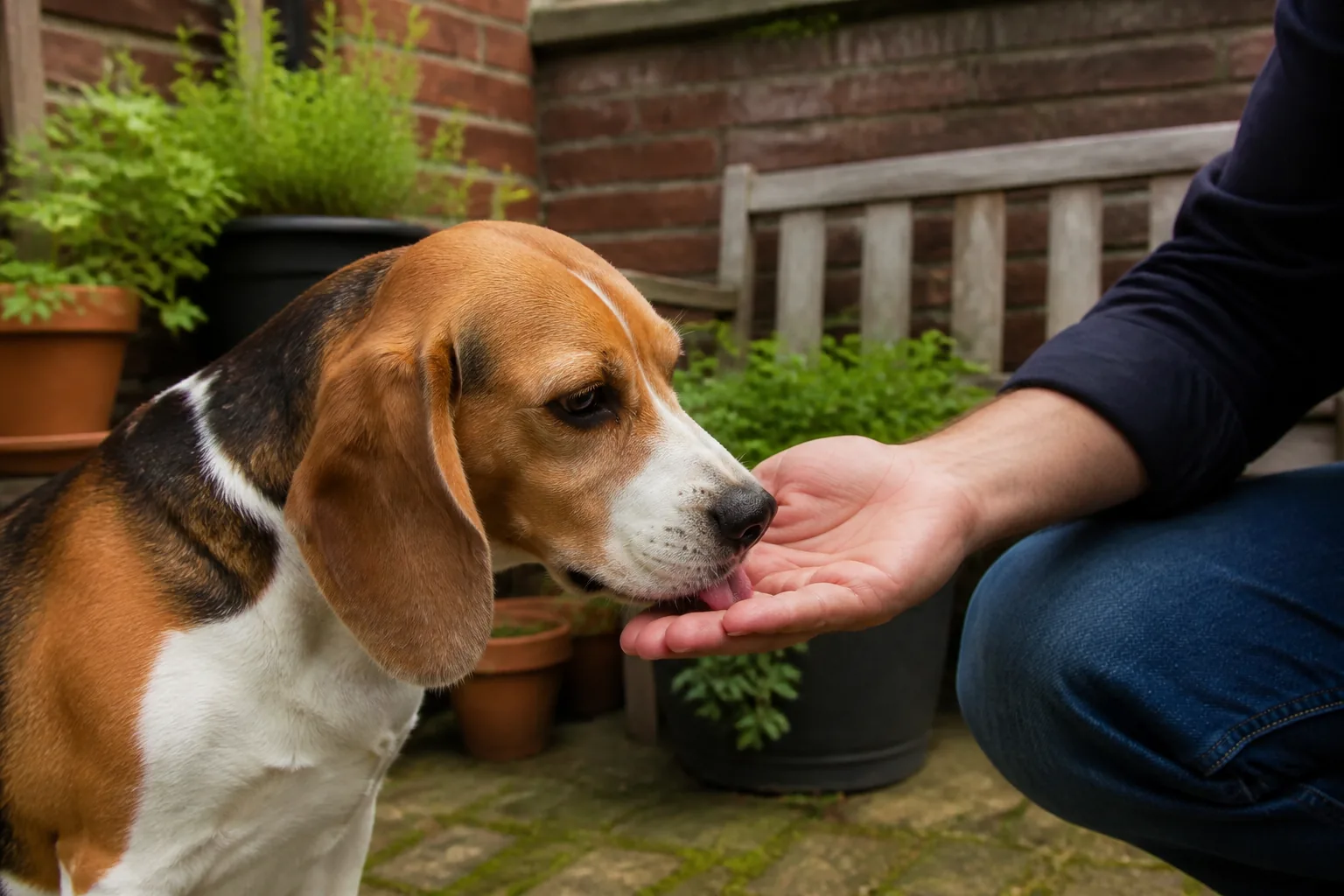
What might a dog mean by licking a person?
VCA describes several common contributors, including social interaction, attention seeking, taste and scent exploration, and learning when the action receives a response. Dogs also investigate the world with the mouth and tongue, so “my dog licked me” cannot identify one precise emotion by itself.
The American Kennel Club likewise notes that salt on skin, food scents, and the owner's response can make licking more rewarding. Calling it a “kiss” can be affectionate shorthand, but it is not a behavioral diagnosis.
Sources: VCA: why dogs lick humans · AKC: why dogs lick.
The same lick can mean different things in different contexts
A quick hand lick when you arrive home may accompany an excited greeting. Repeated arm licking after a run may be more influenced by the taste of sweat. Licking your hand when petting stops may request more interaction. Watch the ears, eyes, body tension, tail, and whether the dog can move on to another activity.
If you do not enjoy being licked, avoid punishment or pushing. Calmly remove your hand, pause interaction briefly, then offer attention when the dog has four paws down, is settled, or chooses a toy. Consistent household rules are easier for a dog to learn.
Use a one-minute lick log instead of guessing
For the next three to five episodes, record four things:
- Trigger: arrival, food, exercise, petting stopped, or no obvious event?
- Target: person, air, floor, or the same part of the dog's body?
- Duration and interruption: seconds or minutes, and can a name cue or toy redirect easily?
- Other signs: relaxed body, panting, pacing, itching, limping, vomiting, or appetite change?
A log cannot diagnose a cause, but it can reveal a pattern and give a veterinarian or qualified behavior professional more useful information.
When does licking need veterinary assessment?
Contact a veterinarian when licking begins suddenly, increases clearly, is hard to interrupt, or repeatedly targets a paw, joint, patch of skin, or other body area. Redness, hair loss, odor, limping, pain, vomiting, diarrhea, unusual swallowing, appetite change, or persistent distress make timely assessment more important.
Repeated licking of objects, floors, or air can also warrant medical and behavioral assessment. Do not assume it is only boredom or anxiety, and do not apply irritating deterrents without veterinary guidance.
Dog licking: common questions
Does my dog lick me because they love me?
Friendly social contact may be one contributor, but a lick alone does not prove “love.” Taste, attention, habit, arousal, and context can overlap.
Why does my dog lick me more after exercise?
Sweat leaves salt and scent on skin, which may make licking more interesting. Post-exercise arousal and your response can contribute too.
Should I let my dog lick my face?
That is a personal boundary and hygiene decision. Avoid contact with eyes, mouth, open wounds, or the face of someone who is immunocompromised. If licking is unwanted, redirect calmly and consistently.