What can a cat's purr mean?
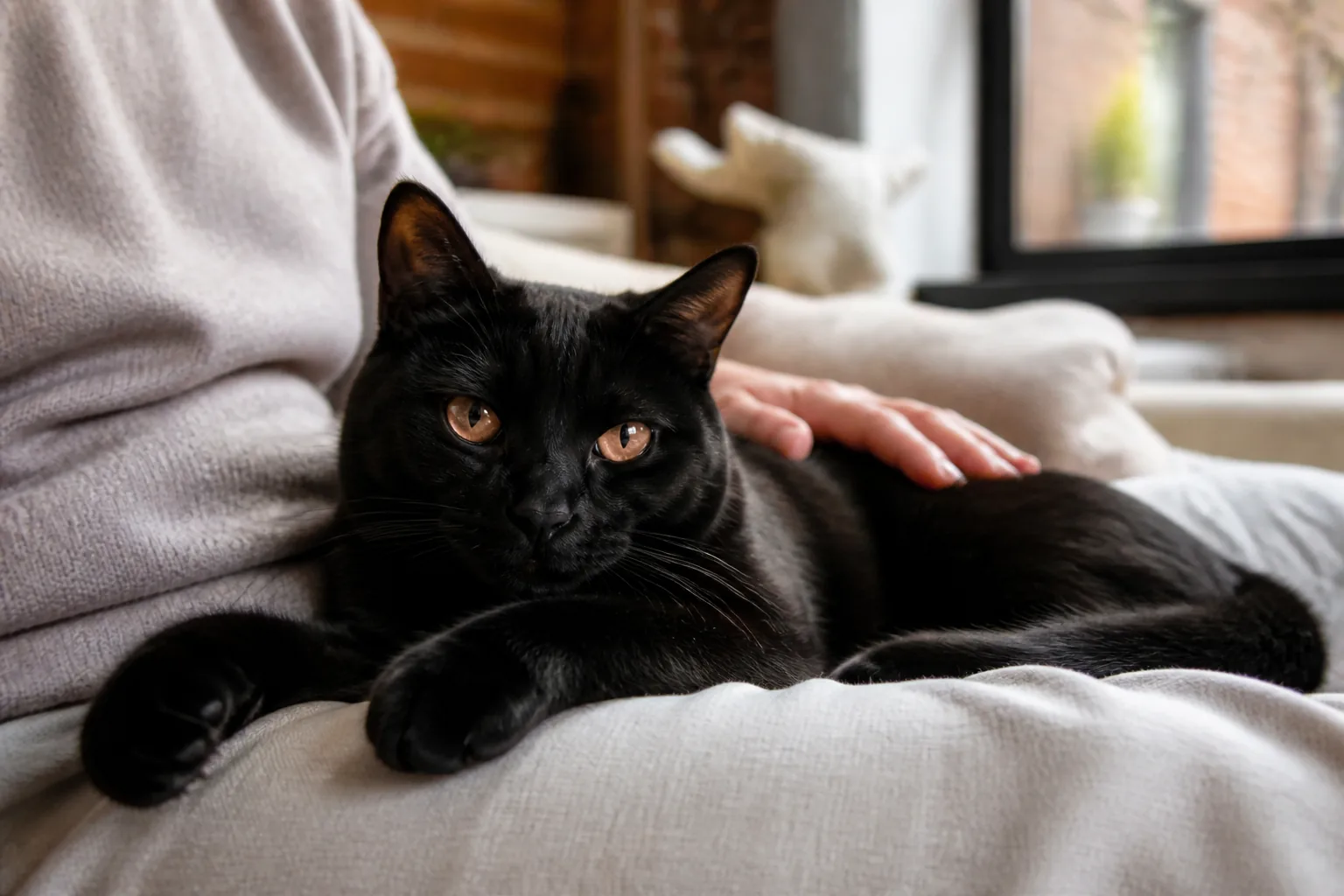
The familiar context is relaxation: a cat lies loosely, softens the eyes and muscles, and purrs beside a trusted person. Mothers and kittens also purr during early interaction. Some cats purr around food preparation or attention, so the sound can take part in social communication too.
The same sound may also appear at a clinic, during injury, birth, or discomfort. Instead of asking what purring always equals, ask when it happens and what the rest of the body is doing.
Veterinary context: VCA Animal Hospitals: meanings of cat sounds.
How do cats make a purr?
A purr is a low-frequency pulsed laryngeal vibration that can continue through inhalation and exhalation. It was often explained as rapid muscle contractions driven by neural input. A 2023 laboratory study examined larynges from eight domestic cats and found that airflow could produce purr-like low frequencies through specialized vocal-fold tissue without continuing neural input.
That work helps explain how the sound can be produced; it does not assign one emotional meaning to every purr. Mechanics and communication are different questions.
Research: Current Biology: low-frequency purr production in domestic cats.
Use a purr context card
Choose one purring episode and fill four boxes before naming the emotion. If all four match the cat’s familiar relaxed pattern, “comfortable” is a reasonable description. A clear departure deserves closer observation or veterinary advice.
When should purring prompt a veterinary call?
If unusual purring accompanies hiding, body tension, breathing change, reduced appetite, limping, injury, elimination change, or persistent vocalizing, do not assume the cat is fine because it still purrs. Cats can conceal discomfort; the combination and sustained change matter more than one sound.
You do not need to explain the purr before asking for help. Note the time, posture, appetite, and a short video to give the veterinarian useful context.
Cat purring: common questions
Does purring always mean happiness?
No. Purring often appears with relaxation and friendly contact, but it can also occur during stress, pain, or discomfort. Read posture, appetite, place, and change from routine.
Can cats control their purr?
Context and the nervous system likely influence when purring starts and stops, while laryngeal tissue and airflow can support passive vibration. The complete control mechanism remains under study.
What if purring suddenly increases?
Record accompanying behavior and physical changes. Contact a veterinarian if it comes with hiding, appetite or breathing change, pain signs, or a sustained departure from normal.